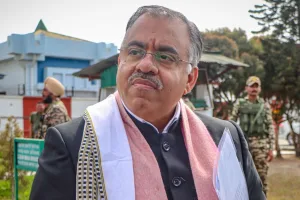
Dr. Sudhanshu, secretary, APEDA, today emphasized the critical role of crop nutrition, quality assurance and organized supply chains in boosting India’s agricultural productivity and exports.
While addressing a PHDCCI Agribusiness Summit here, he highlighted the need for modern infrastructure, citing potato clusters in Uttar Pradesh and Gujarat where cold storage facilities must embrace the latest technology to preserve quality.
He also highlighted APEDA’s network of NABL-accredited laboratories that support farmers and exporters with rigorous testing and traceability standards.
He cited examples from grape, pomegranate and peanut exports where strong systems helped India meet global requirements, along with recent tailored exports such as non-Basmati rice shipments to Japan.
Advertisement
According to him, organised supply chains and high-quality inputs can significantly strengthen India’s ability to scale exports and expand agricultural GDP.
Justice Dr. Sudhir Kumar Jain, former Delhi High Court judge and Member (Judicial) at NCDRC, stressed the need for greater consumer-rights awareness among farmers. He said most rural families remain unaware of protections under the Consumer Protection Act, 2019, despite India’s rise as a major agri-tech market.
He noted that farmers can now access quicker dispute resolution for issues such as defective seeds, rejected crop insurance claims or crop damage, including through class-action complaints filed by multiple affected farmers.
Speaking on farmer outreach, RK Goyal, Managing Director, South Asia & SE Asia, Verdesian Life Sciences, said seed and nutrient technologies are showing 15–20 percent yield gains in several trials across villages.
He added that approved nutrient-efficiency technologies are enabling farmers to reduce DAP usage by up to 40 per cent while strengthening crop growth, a shift he said is essential for improving productivity at scale.
NAFED Director Ashok Thakur outlined how farmer institutions can convert policy into results, citing NAFED’s turnaround from large losses a decade ago to improved procurement and expanded storage capacity. He noted that higher recovery rates in onions and local job creation were possible due to decentralised storage and better handling practices.
The session concluded with agreement that improved nutrient management, modern storage, traceability and farmer awareness must move in parallel to support higher yields and a more resilient agricultural economy.